
When the air outside feels like a warm towel, your HVAC system is working overtime to pull moisture out of the air. If that moisture doesn’t drain perfectly, your vents become a private highway for fungal growth. Improving the air quality Bexar County families breathe starts with realizing that a HVAC system isn’t just moving air; it might be transporting an invisible colony of mold throughout every room in a home.
At Hayden Restoration, we specialize in identifying these “hidden travelers” before they become a major health or structural headache. Understanding how this process starts is the first step in reclaiming your home’s air.
Anatomy of an Outbreak: The Invisible Path
Understanding how mold maneuvers through your home is the first step in stopping it. Whether you are in a historic home in King William or a modern new build in Stone Oak, the physics of spore travel remains the same. Moreover, mold doesn’t need much to thrive; just a little moisture and a way to move.
1. The Source: The Evaporator Coil
The heart of your AC system is the evaporator coil. As warm San Antonio air passes over these cold coils, condensation forms, much like the sweat on a glass of iced tea. In a perfect world, this moisture drips into a pan and drains away.
However, when dust and cedar pollen bypass your filters, they settle on these damp coils, creating a literal petri dish. This is where mold remediation in San Antonio often begins: at the source of the moisture.
2. The Engine: The Blower Motor
Once mold begins to colonize the coils or the primary drain pan, it meets the engine. The blower fan is designed to move thousands of cubic feet of air per minute. As it pulls air across the contaminated coils, it aerosolizes the microscopic mold spores.
Instead of just circulating cool air, your system becomes a high-powered distribution hub, sending invisible spores through the supply plenum and into every corner of your home.
3. The Distribution: Why You See Black Dust on Vents
Have you noticed a dark, smudge-like substance on your ceiling vents in the living room or bedroom? Many homeowners assume it’s just Texas dust, but if you have a leak or high humidity in an attic unit, that dust is often bio-growth.
Because the HVAC system is a closed loop, mold spores eventually settle where the air slows down, at the registers. This explains why you might see mold in HVAC vents in your downstairs living area even if the actual moisture problem is located in a crawlspace or attic across the house.
Why DIY Sprays Fail in Central Texas
When a San Antonio homeowner spots a dark smudge on a vent, the first instinct is often to grab a bottle of bleach or a generic “mold killer” from a big-box store. While this might provide a temporary cosmetic fix, it rarely addresses the systemic issue hiding deep within your ductwork.
Professional vs. Mold Removal
Because mold in San Antonio thrives on the sticky organic buildup (dust and pollen) inside your ducts, a surface spray cannot reach the colony’s roots located on the evaporator coils or inside the insulation. To truly clear the air, you need professional mold removal, a process that involves specialized HEPA-vacuuming and antimicrobial fogging that treats the entire air path, not just the visible exit point.
The Hidden Danger: Chemical Sensitivity in the Texas Heat
There is another local factor to consider: our extreme heat. During a 100°F July day in Bexar County, your AC is likely running 18 to 20 hours a day. If you douse your vents in harsh, non-commercial chemicals or bleach, those fumes are continuously recirculated through your home’s sealed environment.
This can lead to:
- Volatile Organic Compound (VOC) buildup: Creating respiratory irritation that mimics the mold symptoms you were trying to fix.
- Corrosion: Bleach is corrosive to the metal components and delicate fins of your HVAC system, potentially leading to expensive mechanical repairs.
Health Signals: The San Antonio Allergy Mask
In South Texas, we are accustomed to cedar fever and heavy oak pollen. However, many Bexar County residents unknowingly live with HVAC-driven mold growth because the physical symptoms almost perfectly mimic seasonal allergies. Distinguishing between the two is critical for both your health and the structural integrity of your home.
The Misdiagnosis: Mold vs. Mountain Cedar
It is common for residents to blame a scratchy throat or itchy eyes on the Ashe Juniper (Mountain Cedar) trees that dominate the Hill Country from December to February. According to the Cleveland Clinic, cedar fever triggers nasal congestion, fatigue, and sore throats, symptoms that are nearly identical to a mold allergy.
The key difference often lies in location and timing:
- Seasonal Allergies: Typically peak outdoors or when windows are open. Symptoms often fluctuate with the daily pollen count.
- HVAC Mold Growth: Symptoms often worsen after the AC or heat has been running for an hour and tend to persist year-round, regardless of the outdoor pollen forecast.
Key Symptoms: The Indoor Flare-Up
If you find that your allergies disappear when you go to work or run errands, but return shortly after you settle into your living room, your HVAC system may be the culprit. The CDC notes that damp indoor environments are linked to upper respiratory tract symptoms, including:
- Persistent coughing
- Eye and throat irritation
- Chronic fatigue
The Hayden Restoration Protocol: Reclaiming Your Home’s Air
At Hayden Restoration, we don’t just clean vents; we restore environments. Our IICRC-certified team follows a rigorous approach to ensure that the “Hidden Traveler” is removed for good. While every San Antonio home has its own unique challenges, our core protocol remains the gold standard.
Step 1: Source Identification and Containment
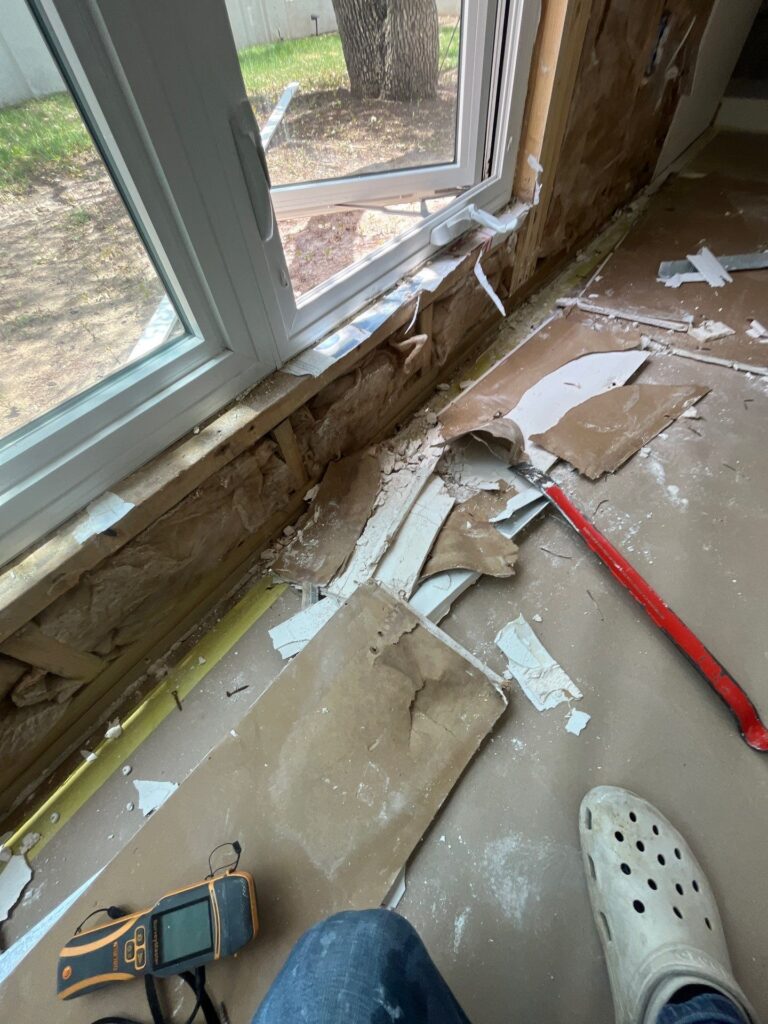
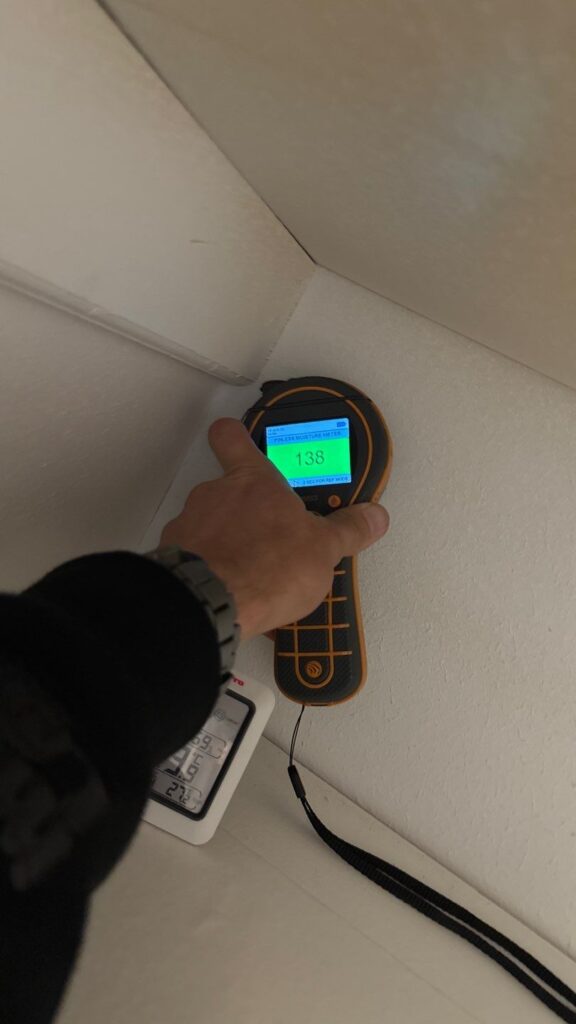
Before we touch a single vent, we identify the moisture source. After all, mold will always return if the underlying moisture issue isn’t resolved. We use thermal imaging and moisture meters to find leaks in your attic or clogs in your primary drain line.
Once the source is identified, we establish negative air pressure. By sealing off the work area with polyethylene sheeting and using industrial air scrubbers, we ensure that when we disturb the mold, the spores are vacuumed out of your home rather than blown into your bedrooms.
Step 2: Mechanical Agitation and HEPA Extraction
Mold doesn’t just sit on the surface; it clings to the dust and biofilm inside your ducts. We use specialized rotating brushes and compressed air whips to physically dislodge mold from:
- Evaporator coils
- Blower motors
- Supply plenums
We then use HEPA vacuums that are rated to trap particles as small as 0.3 microns, effectively capturing mold spores that are invisible to the human eye.
Step 3: Antimicrobial Treatment and Precision Sealing
Once the system is physically clean, we apply an EPA-registered antimicrobial treatment. This isn’t a cover-up spray; it’s a medical-grade fogging process that kills any remaining microscopic spores and inhibits future growth.
Finally, we address the leakage that allows San Antonio humidity to seep into your system. We use mastic sealant and foil-backed tape to close gaps in your ductwork.
Local FAQ
Does San Antonio humidity cause mold in AC?
Yes. According to the EPA, mold requires three things to grow: warmth, food (dust/pollen), and moisture.
Can mold spread through central air?
Absolutely. The CDC and the EPA warn that if mold is present in your HVAC system, running the air can aerosolize spores and distribute them throughout the entire building.
Take a Deep Breath Again; The Right Way
Don’t let a musty smell become a permanent resident in your home. At Hayden Restoration, we combine local San Antonio expertise with industry-leading technology to find and eliminate mold at its source.
Ready to clear the air? We are currently offering a Free Visual HVAC Mold Assessment for homeowners in Bexar County. Let our experts give you the peace of mind you deserve.
Expand Your Knowledge
- Preventive Maintenance in Texas: Something always needs fixing. But what if you could prevent many of those issues before they even start?
- Water Damage Restoration Texas: Proven strategies to keep your home below the 60% mold danger zone.
- Bathroom Remodeling in TX: Remodeling is temporary but how you feel during the process matters