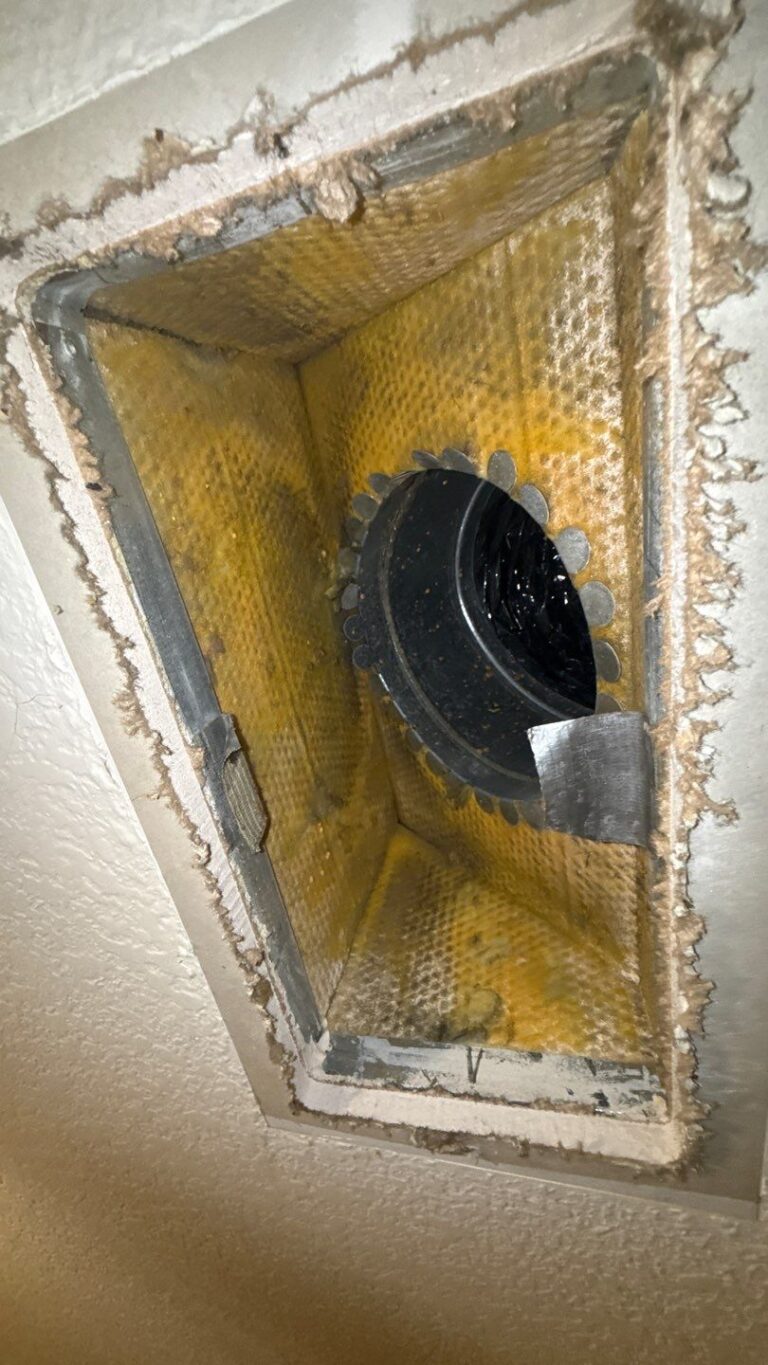

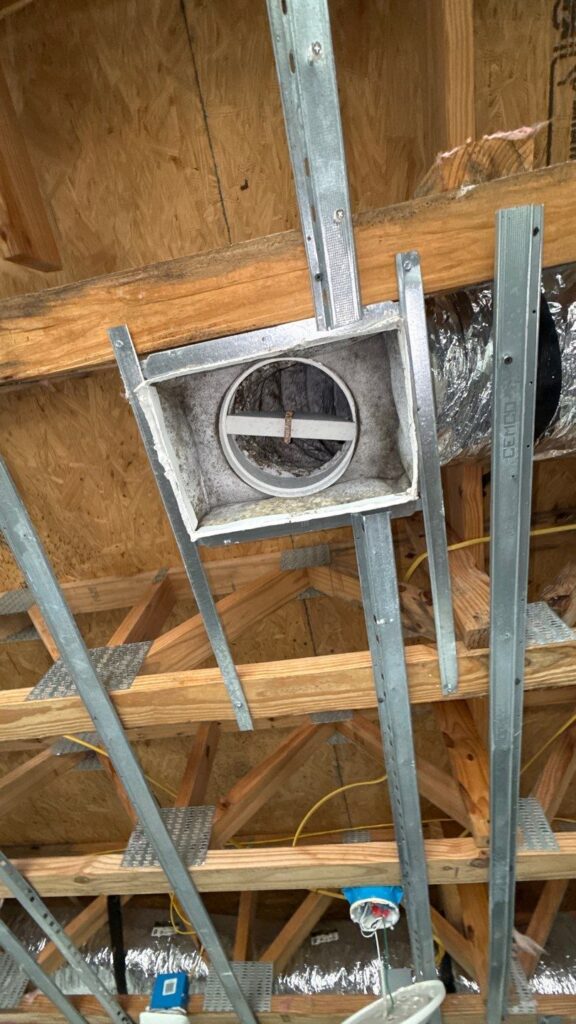
If you live in San Antonio, you know the routine: the humidity spikes, the AC kicks into overdrive, and suddenly, there’s a persistent, earthy odor coming from your vents. Many homeowners in this situation immediately call a duct cleaner, hoping a quick vacuuming will solve the problem.
However, there is a massive difference between removing dust and remediating a fungal colony. In the state of Texas, misidentifying these two can lead to more than just a lingering smell.
The Decision Matrix: At a Glance
To help you decide which service your home actually needs, use this comparison guide.
Feature | Standard Duct Cleaning | HVAC Mold Remediation (Hayden) |
Primary Goal | Removal of dust, hair, and debris. | Killing and removing active fungal colonies. |
Methods | Compressed air and high-powered vacuums. | HEPA containment, biocides, and source removal. |
Texas Licensing | Generally unregulated. | Required (TDLR Licensed MRC). |
Best For… | General allergies and improved air flow. | Musty smells, visible mold, or health issues. |
San Antonio Cost | $600 – $2,000 | $3,000 – $10,000 |
The San Antonio Stalemate: Why Your Musty Smell Isn’t Going Away
In South Texas, our HVAC systems don’t just cool the air; they act as massive dehumidifiers. This creates a unique stalemate between your comfort and your home’s air quality.
The Neighborhood Factor
We see two distinct problems across the San Antonio metro:
- The Historic Struggle: In older ductwork, years of settling dust provide the perfect food for mold once humidity enters the system through aging seals.
- The New Build Trap: In newer developments, high-efficiency systems are designed to be airtight. While great for your energy bill, these systems can trap moisture against the cooling coils, leading to a bacterial and fungal cocktail that thrives in the dark, damp corners of your air handler.
The 30-Day Relapse
The biggest mistake we see homeowners make is choosing a $300 blow-and-go duct cleaning when they actually have a mold infestation.
Duct cleaning is a mechanical process; it removes the symptoms (the dust). However, mold growth is a biological process. If the spores are embedded in the porous insulation of your plenums or growing on your evaporator coils, a vacuum won’t stop them. Within 30 days, the moisture returns, the spores bloom, and you’re right back where you started.
The Cleaning Myth: Why Vacuums Can’t Kill Mold
Many San Antonio homeowners assume that mold is simply organic dust that can be sucked away. This is a dangerous misconception that ignores the biological reality of fungal growth.
Structural Limits: The Root of the Problem
Mold does not just sit on the surface of your ducts; it is a living organism that seeks a food source. In many Texas homes, particularly those built in the last 30 years, air ducts are constructed from or lined with fiberglass duct board.
While the glass fibers themselves are inorganic, the dust and moisture trapped within them are highly organic. Mold roots into these porous materials using hyphae (microscopic, thread-like structures). A standard duct vacuum only removes the fruit (the spores) while leaving the roots (the hyphal fragments) embedded in the insulation.
The Danger of Agitation
Standard duct cleaning involves agitating the inside of the ducts with brushes or compressed air. Without the HEPA-filtered negative pressure containment used in professional remediation, this process can be disastrous.
The EPA warns that if not performed correctly, duct cleaning can actually increase the amount of dust and contaminants in your home by aerosolizing them.
The Texas Legal Factor: Why Duct Cleaners Aren’t Remediators
In Texas, the distinction between a cleaner and a remediator isn’t just a marketing term, it is a matter of state law.
The 25-Square-Foot Rule (Texas Occupations Code §1958)
Under the Texas Mold Assessment and Remediation Rules (TMARR), any project where the mold contamination affects a total surface area of 25 contiguous square feet or more must, by law, be handled by a Texas licensed mold remediation contractor (MRC).
In an HVAC system, this threshold is met almost instantly. Between the evaporator coils, the supply plenum, and the trunk lines, a contaminated system nearly always exceeds 25 square feet of affected area. Hiring an unlicensed duct cleaner for a project of this size is a violation of state regulations designed to protect consumers.
Biomedical Remediation and Licensing (16 TAC §75.10)
Many discount cleaners offer to sanitize your ducts with a spray. However, per 16 Texas Administrative Code §75.10, the application of disinfectants, biocides, or anti-fungal substances to an HVAC system for the purpose of “Biomedical Remediation” requires specific licensing from the Texas Department of Licensing and Regulation (TDLR).
The Paperwork: The CMDR Difference
One of the most vital reasons to choose a licensed professional like Hayden Restoration is the Certificate of Mold Remediation (CMDR).
- Real Estate Value: When you sell your home in San Antonio, you must disclose past mold issues.
- Legal Protection: A CMDR is the only legal proof that the mold was remediated according to state standards.
Only a licensed MRC can issue this certificate. If you hire a standard duct cleaner, you will have no clean bill of health paperwork to show future buyers or insurance companies, which can significantly hinder your home’s resale value.
The Hayden Restoration Process: What Actually Works
At Hayden Restoration, we follow a rigorous, science-based protocol that exceeds the basic vacuuming offered by standard duct cleaners. Our process is designed to comply with ACCA Standard 12 and the NADCA ACR Standard for the assessment, cleaning, and restoration of HVAC systems.
1. Source Control: Fixing the Why
Cleaning a system without fixing the moisture source is a temporary fix. Our first step is a forensic inspection of your system’s envelope.
- Sealing the Plenums: We identify and seal air leaks in the supply and return plenums using mastic or UL-181 rated foil tape.
- Drainage Correction: We ensure the primary and secondary condensate lines are clear and sloped correctly.
2. HEPA Scrubbing: Cleaning the Air While We Clean the Ducts
Standard duct cleaning can stir up millions of spores. To prevent cross-contamination, we use industrial-grade HEPA Air Scrubbers throughout the process.
- The 99.97% Standard: Our scrubbers use “True HEPA” filtration, which captures 99.97% of particles down to 0.3 microns.
- Negative Pressure: By creating a vacuum within the work area, we ensure that any mold agitated during the cleaning is pulled into our filters rather than drifting into your living room or bedrooms.
3. Anti-Microbial Treatment: The TDLR-Compliant Shield
Once the mechanical cleaning is complete, we apply a specialized treatment to prevent the mold from returning.
- EPA-Registered Biocides: We utilize only EPA-registered antimicrobials specifically labeled for use in HVAC systems, such as EnviroCon.
- Licensing Matters: Per 16 TAC §75.10, the application of these biocides in Texas must be overseen by a licensed professional. This sanitization step creates a fungistatic barrier on the interior of your ducts, making it significantly harder for new spores to take root during our humid San Antonio summers.
FAQ: San Antonio HVAC Mold Remediation
Does homeowner’s insurance cover HVAC mold remediation? In Texas, coverage depends on the cause of the mold. If the mold resulted from a sudden and accidental discharge of water (like a burst pipe), it is often covered. However, mold caused by high humidity or poor maintenance is typically excluded.
How long does the remediation process take? A standard duct cleaning takes 3–5 hours. A full TDLR-compliant HVAC remediation typically takes 1 to 3 days, depending on the size of the system and the level of containment required to keep your family safe.
Can I just use bleach to clean the mold off my vents? No. The EPA and the Texas Department of State Health Services (DSHS) explicitly advise against using bleach on porous surfaces like duct board or insulation.
Conclusion: Choosing Value Over Price
When it comes to the air your family breathes, the cheapest option is often the most expensive in the long run. At Hayden Restoration, we call this the “Double Payment!” Every month, we see San Antonio homeowners who paid $600 for a discount duct cleaning, only to call us 30 days later when the musty smell returns. They end up paying for the remediation they should have had in the first place, plus the cost of the failed cleaning.
Why San Antonio Trusts Hayden Restoration
We aren’t just a cleaning company; we are TDLR-licensed mold remediation contractors who understand the specific architectural and climatic challenges of Bexar County. From the historic attics of Monte Vista to the high-efficiency systems in Stone Oak, we provide:
- Legal compliance
- Real estate security
- Health-first protocols
Does your AC pass the “sniff test”?
Don’t wait for a musty smell to become a costly structural repair or a health liability. Protect your home and your health with a team that knows the difference between surface dust and a biological problem.
Contact Hayden Restoration for a professional moisture and mold assessment in San Antonio today.
Read More from Hayden Restoration
Learn more about protecting your property and navigating the remediation process in Texas:
- Our Professional Mold Remediation Process – A deep dive into how we handle mold projects from initial containment to final clearance.
- The Hayden Restoration Gallery – See before and after examples of HVAC systems and structural remediation we have completed locally.
- About Our TDLR Licensing & Team – Meet our experts and verify our credentials as a Licensed Texas Mold Remediation Contractor.