
The San Antonio Kitchen Restoration Guide: Navigating Slab Leaks, Seamless Flooring, and the Science of a Bone-Dry Home
A kitchen leak often creates a ripple effect that touches everyone involved with your property. Understanding these perspectives helps you make the right call for the long term.
For you and your family, the kitchen is the heart of your home. With every kitchen restoration project, you need to know that mold isn’t colonizing in the dark spaces under your cabinets or island. To the insurance adjuster, decisions are made based on more than just looks. They need moisture maps, psychrometric logs, and hard data to approve a claim. We provide exactly what they need to justify the full scope of your repair.
Scenario A: The Slab Leak & The Psychrometric Save
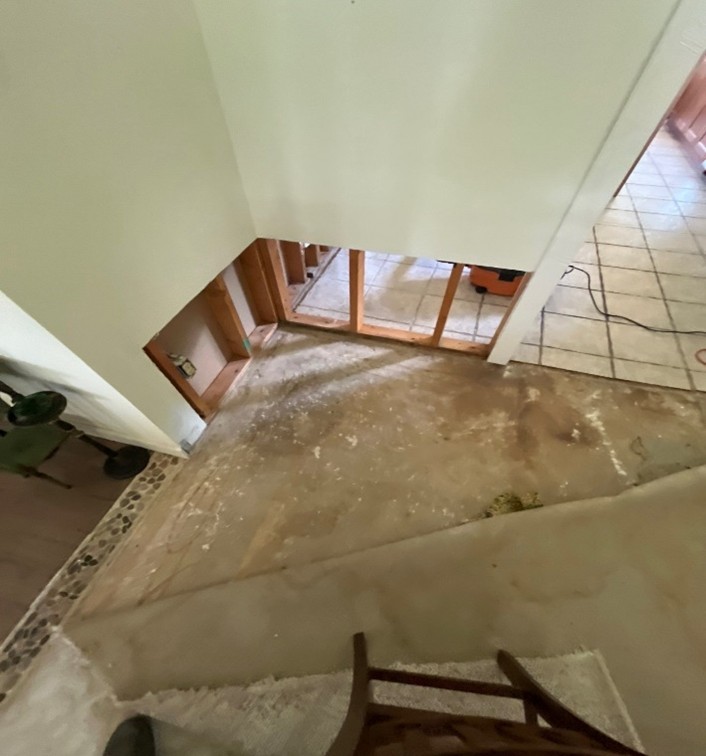
In our recent projects, we’ve had to undertake what we call flooring surgery. When we pull back the LVP and expose the foundation, we aren’t just looking for the leak. We are assessing the saturation of the concrete slab itself.
In San Antonio and Austin, we deal with a lot of slab-on-grade foundations. Concrete might look solid, but it’s actually a porous sponge. When a pipe under that slab pinholes, the concrete sucks up that water and holds it.
If you just wipe the surface and slap new flooring down, you’re trapping that moisture. Eventually, it will try to escape, causing your new floors to bubble or mold to grow in the dark.
The Science of Bone-Dry
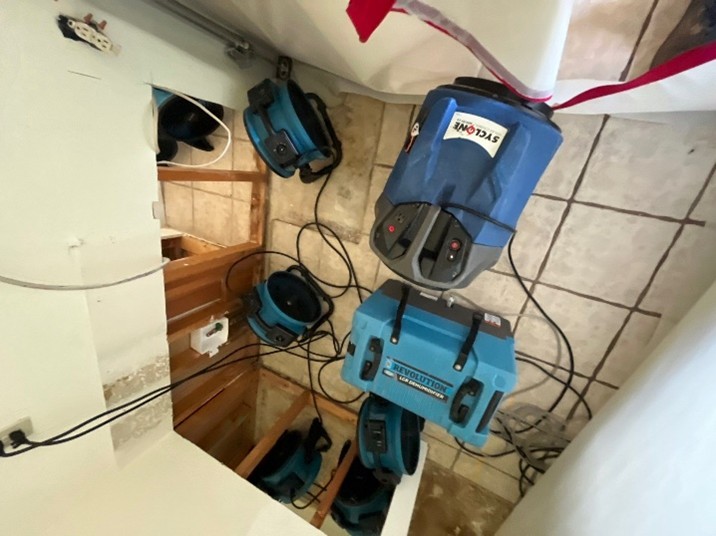
Drying a kitchen isn’t just about pointing a few fans at a wet spot. We follow the IICRC S500 (2021) Standard, which is the professional benchmark for structural drying. It’s not just about moving air; it’s about managing vapor pressure differentials.
Think of it this way: water naturally wants to move from where it’s heavy (your wet slab) to where it’s light (the air in your kitchen). To get your slab truly dry, we have to make the air in your house extremely thirsty.
To do this, we use a specific scientific formula to ensure the evaporation rate is high enough to actually pull water out of the pores of the concrete. It works by simply exploiting the difference between the vapor pressure on the slab’s surface and the vapor pressure in the air.
In your home, we use Low Grain Refrigerant (LGR) dehumidifiers. These aren’t your hardware store variety. They drop the air’s vapor pressure so low that moisture is literally sucked out of the foundation.
Why the Data Matters to You
This technical approach isn’t just for show. It’s what protects your home’s long-term health and your wallet. We don’t guess when the slab is dry. We use moisture meters to verify that the foundation has reached its dry standard before any new flooring is installed.
Scenario B: The Seamless Transition
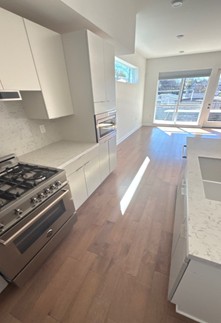
If you’ve ever walked through a home where the kitchen flooring stops abruptly and a completely different wood starts for the living room, then you know the patchwork look. It’s the number one aesthetic fear I hear from homeowners in San Antonio. You don’t want your kitchen to look like a repair job; you want it to look like a design choice.
When we pull back your damaged floors, we aren’t just thinking about the subfloor. We’re looking at the transition lines. We know that if we can’t match your existing flooring perfectly, the value of your open-concept layout is at risk.
In San Antonio today, we’ve moved beyond the clunky T-molding strips that people used to trip over. We focus on creating a flow that feels intentional and seamless.
The Toothing-In Technique
When we’re working with wood or high-end laminates, we use a process called the toothing-in. Instead of a straight line where the old floor meets the new, we stagger the planks. We weave the new material into the old to hide the seam.
This is where the artistry of restoration meets the science of the slab. We also ensure the heights match perfectly so there’s no lip between the kitchen and your dining area.
The Strategic Zone Reset
Sometimes, we find out that your original flooring is no longer in stock. It happens more often than you’d think. If we can’t get a 100% match, we don’t just settle for something close because that’s how you get a kitchen that looks off.
Instead, we suggest a strategic zone reset. We expand the new flooring into the pantry, the laundry room, or the mudroom. By creating a unified wet zone, the transition looks like a deliberate architectural choice rather than a forced repair. It ties the utility spaces of your home together and actually boosts your appraisal value.
Industry Realities: The Logistics of a Seamless Look
- Dye Lot Variance: Even if the brand and color are the same, different manufacturing batches (dye lots) can have slight color shifts. We always verify this before the first plank goes down.
- Transition Logic: We aim for transitions at natural breaks, like under a door frame or along a cabinetry line, to keep the visual weight of the room balanced.
- Wear Layer Importance: A 20-mil wear layer isn’t just a number. It’s the thickness of the protective top coating. For a high-traffic San Antonio kitchen, anything less is a short-term fix.
Non-Invasive Moisture Mapping
In the past, if you suspected water was hiding under your kitchen tile or hardwood, a contractor would have to break a few pieces just to find out. Demolition for discovery, however, was always messy, loud, and often unnecessary.
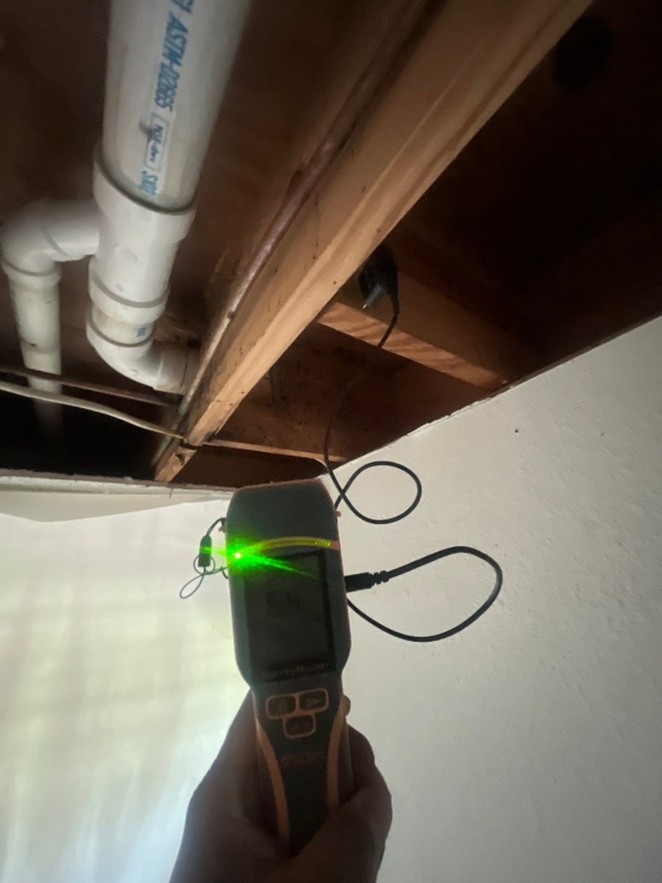
Today, we’ve moved away from the rip and tear mentality toward predictive drying analytics. We don’t guess where the water is anymore; we map it with precision using Tramex and FLIR Electromagnetic Impedance Scanners. The handheld devices allow us to see what’s happening in the dark spaces you can’t reach.
Seeing Through the Floor
Scanners today can see up to 3/4″ deep into your subfloor without drilling a single hole or pulling up a single plank of LVP.
The technology works by sending a low-frequency signal into the material. Because water conducts electricity differently than dry wood or concrete, the meter gives us a digital reading of the moisture levels hidden deep inside.
This means we can tell you exactly where the wet zone ends and the dry zone begins. This way, we only remove what is absolutely necessary, saving you time and keeping your kitchen functional for as long as possible during the dry-out.
Why Your Insurance Company Loves This
This isn’t just about cool gadgets. It’s about the language of the adjuster. Insurance companies are increasingly resistant to paying for unjustified demolition. If a contractor rips up your whole kitchen just to find a leak, the adjuster might push back on the bill.
Because we use non-invasive mapping, we provide your insurance company with a digital moisture map. This is hard evidence that justifies every piece of baseboard we remove or every fan we set up. It minimizes the back-and-forth and helps get your claim approved faster because the data is undeniable.
The Wet Zone Expansion
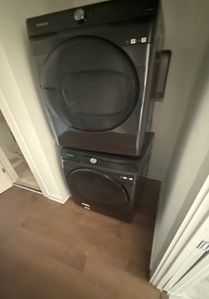
If we’re already pulling up your kitchen floor, it’s the perfect time to look at your pantry and laundry room. In most San Antonio and Austin homes, these rooms are clustered together on the same section of the slab. They usually share the same supply lines and drain stacks behind the walls.
If your kitchen floor has water damage today, your laundry room is likely one aged washer hose away from the same headache tomorrow. We call this unified resilience. It’s about treating your high-risk areas as a single, protected zone rather than isolated rooms.
The Continuous Footprint
Instead of patching just the kitchen and leaving the pantry with old, porous flooring, we recommend extending the new material through the entire wet zone.
When we install a continuous run of 20-mil LVP from the kitchen through the mudroom, we eliminate the seams where water loves to hide. If your washer overflows next year, that water stays on top of the floor where you can mop it up, instead of soaking into the subfloor and starting another claim.
Smart Money vs. Future Claims
This is a strategic move for your wallet. A second water damage claim in three years can easily cost you $10,000 or more between your deductible and the inevitable premium hike.
By upgrading these adjacent zones now, you’re only paying for mobilization and labor once. You are effectively hardening your home against the most common types of insurance losses.
The Valuation Edge
When a buyer’s inspector walks through a home in Austin and sees a seamless, waterproof floor running from the kitchen into the utility spaces, it sends a message. It shows the home is bulletproof against common plumbing fails.
Valuation experts love to see a unified flooring plan. It makes the space feel larger and proves that the owner invested in long-term structural health, not just a cosmetic flip.
FAQ: Common Homeowner Questions
Q: Do I have to replace my entire kitchen floor if only part of it is water damaged?
A: Not necessarily. If we catch the leak within 24 hours and you have a floating system like LVP, we can often perform a partial mitigation. However, if your concrete slab is saturated, the flooring must come up. This allows for IICRC S500-compliant structural drying. If you trap moisture under new planks, you’re essentially building a greenhouse for mold.
Q: How do we ensure mold doesn’t grow under the new kitchen floor after a leak?
A: We don’t guess, we verify. First, we apply EPA-registered antimicrobial sanitizers (like ShockWave) to kill existing spores. Then, we monitor the slab until it reaches its dry standard, typically <4% moisture content for concrete. We provide you with a digital moisture map as physical proof of a successful dry-out for your permanent home records.
Insurance & Regulation: The Hayden Standard
In 2026, the average water damage payout in Texas ranges between $7,000 and $12,500. The difference between a smooth claim and a denied one usually comes down to documentation.
We provide the photo-evidence adjusters look for:
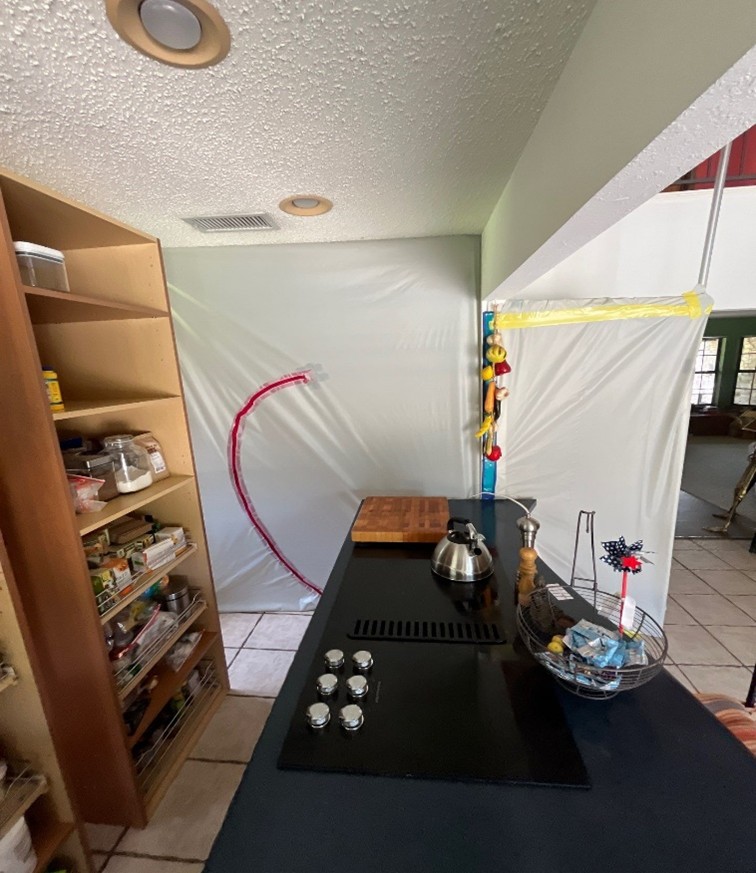
- Containment Zones: Photos of our HEPA-filtered chambers.
- Flood Cuts: Documentation of why specific sections of drywall were removed.
- Compliance: We strictly follow IICRC S520-2024 standards for mold remediation. This means we use professional containment to ensure the dirty phase of your kitchen tear-out never compromises the air quality in the rest of your home.
Let’s Make Your Kitchen Whole Again
If your kitchen floor is starting to tell a story you don’t like, don’t wait for the damage to spread to your subfloor or your neighbors’ units. At Hayden Restoration, we combine local San Antonio expertise with the latest in predictive drying technology to get your home back to normal, fast, safe, and documented.
Contact Hayden Restoration today for a non-invasive moisture assessment. Let’s see what’s really happening under your floor before the rip and tear begins.