
To you and any other person, your bathroom is a masterpiece of modern engineering hidden behind tile and cabinetry. But in the restoration world, it’s a high-stakes environment where water is constantly looking for an exit strategy. Whether you are dealing with a luxury remodel in Austin or a historic bungalow in San Antonio, understanding the hidden anatomy of your bathroom can be the difference between a quick bathroom restoration fix and a total gut job.
At Hayden Restoration, we believe in transparency, not just in our pricing, but in the science of how your home breathes, reacts, and occasionally, breaks down.
The Vanity Valve Phenomenon: Why Small Parts Cause Big Chaos
In the restoration industry, we’ve noticed a troubling trend. In 2026, we are seeing a significant spike in failures of contractor-grade supply valves, particularly in homes built during the construction booms of 2010–2020.
A pinhole leak in one of these valves rarely creates a dramatic flood. Instead, it creates a slow, rhythmic drip that stays hidden behind the vanity back-panel. It doesn’t flood the room; it feeds the materials.
The Technical Breakdown: Why It Gets Worse Fast
- Capillary Action (Wicking): Water doesn’t just sit on the floor; it climbs. Due to capillary action, moisture can travel upward through porous materials. Standard bathroom drywall is notorious for this, with many restoration professionals finding that moisture often wicks up to 24 inches above the floor line within just 48 hours.
- The Particle Board Trap: Most modern stock vanities are constructed from MDF (Medium-Density Fiberboard) or particle board. These materials are essentially wood sponges held together by resin.
- The Breaking Point: When the Equilibrium Moisture Content (EMC) of these wood-based materials exceeds 16%, the structural glues often begin to fail. This leads to delamination, that irreversible swelling and bubbling you see on cabinet doors and side panels.
The Hayden Method: Precision Surgical Demo
Most companies approach bathroom cabinet mold remediation with a sledgehammer, assuming the entire unit is a loss. We prefer a more refined approach.
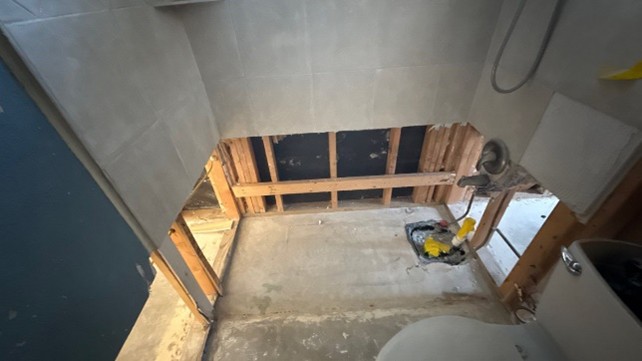
In Austin and San Antonio, where custom stone countertops are common, a full demo is often unnecessary and expensive. Our approach utilizes high-oscillation tools to remove only the saturated cabinet floor and the bottom few inches of the back-panel.
By targeting the specific wet zone, we can often perform subfloor rot repair and structural drying without ever disturbing your expensive quartz or marble countertops. This way, we save the stone, save the sink, and save you thousands in replacement costs.
Transitioning to the Skeleton: Wall & Stud Restoration
When we strip your bathroom; ripping out the tile, the drywall, and the baseboards, we are looking at the skeleton of your home. In a high-humidity environment like Austin or San Antonio, this is where the most critical restoration work happens.
The Regulatory Angle: Why Bleach is a Red Flag
If you hire a contractor who reaches for a jug of bleach the moment they see mold behind a vanity, it’s time to pause the whole operation. According to the ANSI/IICRC S520 (2024/2025 updates), source removal is the only acceptable method for porous materials.
Bleach is largely ineffective on porous surfaces like wood studs and drywall. It often kills the color of the mold (making it look clean) while leaving the microscopic roots (hyphae) intact to regrow once the moisture returns. The new S520 standards prioritize the physical removal of the mold and the contaminated material itself, rather than chemical masking.
HEPA-Filtered Containment: Protecting Your Air
One of the most common mistakes in DIY or amateur restoration is cross-contamination. When you tear out a moldy wall, you release millions of spores into the air. Without proper containment, those spores can easily travel via your HVAC system into your master bedroom or living area.
At Hayden Restoration, we don’t just start cutting. We establish a Negative Air Environment.
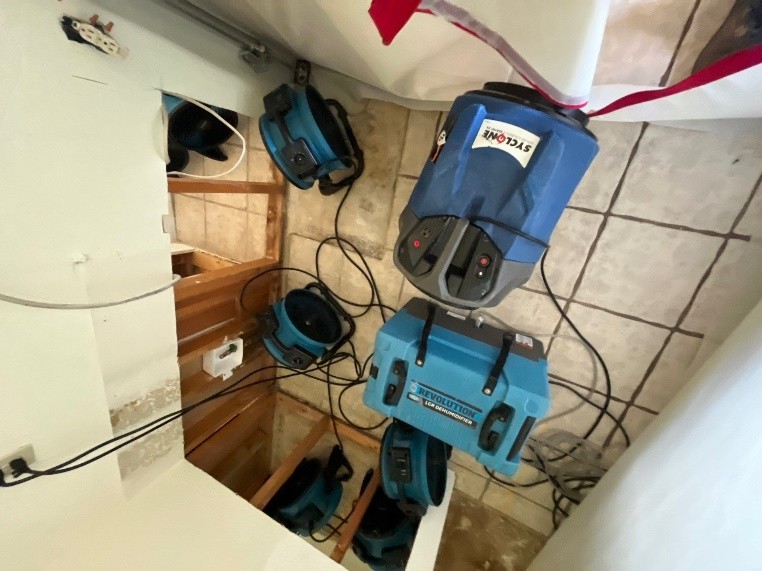
Using industrial-grade HEPA air scrubbers, we ensure that air only flows into the work zone and is filtered before being exhausted. This keeps the rest of your home a “Clean Room” while we handle the “Dirty Room.”
Anti-Microbial Encapsulation: The Future-Proofing Step
Once the affected drywall is removed and the structural skeleton (the studs) is exposed and dried to the proper Equilibrium Moisture Content, we move to the preservation phase.
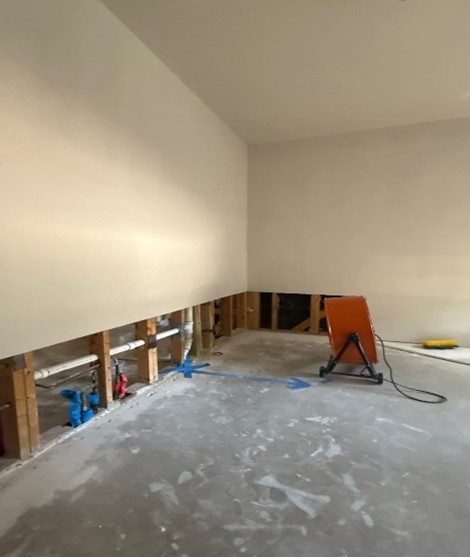
We apply professional-grade anti-microbial encapsulation. This isn’t just paint; it’s a specialized sealant designed to inhibit future fungal growth. Even if a small amount of moisture finds its way back into that wall cavity years from now, the treated wood is far less likely to support a mold colony.
The Dirty Water Reality Check
Many homeowners assume a bathroom leak is just clean water. However, a significant proportion of bathroom-related leaks involve Category 2 (Gray Water) or Category 3 (Black Water).
Because bathrooms often integrate both supply lines (clean) and drain lines (sewage/gray), a leak from a sink p-trap or a toilet flange brings in bacteria and pathogens that require professional-grade sanitation. According to the guidelines detailed in the ANSI/IICRC S500 Standard for Professional Water Damage Restoration, handling this level of contamination goes far beyond simple drying; it is about executing a strictly regulated decontamination protocol to make the space medically safe for your family.
The Subfloor Stabilizer: From Damp Plywood to Structural Soundness
When a vanity leak moves from the cabinet floor to the subfloor, the project shifts from a cosmetic fix to a structural one. This is the structural pivot that makes the expertise of the restorer invaluable. While a standard remodeler might be tempted to patch and prime, a professional restoration team understands that moisture trapped in the subfloor is a ticking time bomb for your home’s integrity.
The Science of The Soft Spot
Wood is a hygroscopic material, meaning it actively absorbs and releases moisture to reach equilibrium with its environment. However, when a leak occurs, the wood enters a saturated state.
- Plywood Delamination: In older Austin homes with plywood subfloors, the water dissolves the glues holding the veneers together, causing the layers to separate (delaminate) and lose their load-bearing capacity.
- OSB Swelling: In newer construction, Oriented Strand Board (OSB) is common. When OSB gets wet, the edges often swell up to 15%–25% thicker than the rest of the board. This creates crowning that can crack expensive floor tiles weeks after the leak is fixed.
- Structural Failure: Once the wood’s moisture content remains high for an extended period, cellulose-eating fungi begin to break down the fibers. This leads to the “soft spot” or “spongy floor” often felt near the toilet or vanity.
Slab vs. Pier & Beam: The Central Texas Context
In the San Antonio and Austin corridors, foundation types dictate the restoration strategy.
- Slab-on-Grade: For homes on concrete slabs, a hidden bathroom leak can lead to slab heave. As moisture gets trapped between the slab and the flooring, it puts upward pressure on the concrete or saturates the soil underneath, leading to shifting.
- Pier & Beam: In historic neighborhoods like King William or Hyde Park, bathrooms often sit on wooden joists. A vanity leak here doesn’t just sit; it travels. It rots the joists and the rim board, which can eventually compromise the exterior wall’s stability.
Moisture Mapping: The X-Ray View
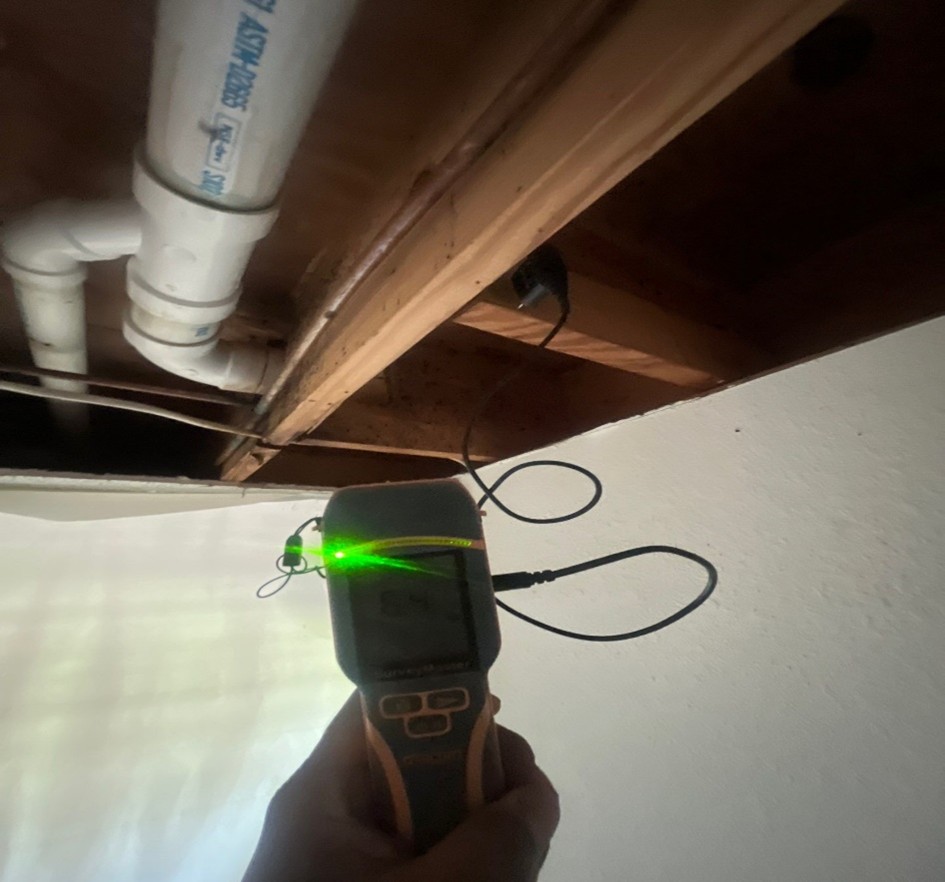
At Hayden Restoration, we don’t believe in destructive testing as a first resort. We use Infrared Thermography to map the moisture plume beneath your tile or floorboards.
Because wet materials evaporate and cool differently than dry ones, our thermal cameras see the hidden path of the water. This allows us to map exactly where the rot is occurring without ripping up your entire bathroom. By identifying the exact boundaries of the damage, we can perform a targeted extraction and drying process, often saving large sections of the original floor.
2026 Emerging Trends: The Better Than Before Finish
At Hayden Restoration, our goal isn’t just to return your home to its pre-loss condition; it’s to leave it better than we found it. In the competitive Central Texas housing market, a bathroom restoration is no longer just a repair, it’s a strategic investment.
Restoration as an Asset
In 2026, data suggests that bathroom restorations remain one of the most effective ways to bolster home value. In the Austin and San Antonio markets, homeowners tend to recoup between 60% and 72% of their renovation costs at resale, according to regional data tracked in the annual Zonda Cost vs. Value Report. By choosing high-performance materials during the build-back phase, you aren’t just fixing a leak; you’re future-proofing your equity.
Smart Moisture Defense: The Silent Sentry
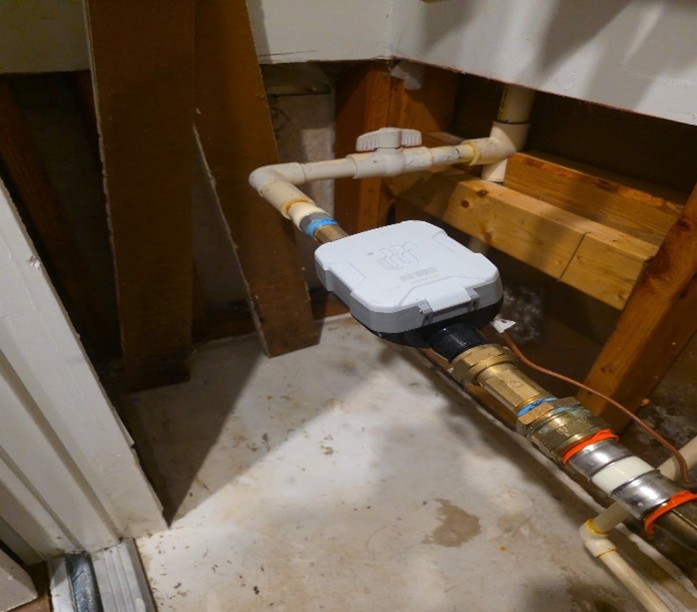
The best way to handle bathroom water damage restoration in Austin is to ensure it never happens again. During the plumbing rebuild, we strongly recommend integrating a smart water security system.
Systems like the Moen Flo or Phyn Plus act as a digital heartbeat for your home’s plumbing. These devices use AI-driven pressure-wave technology to detect micro-leaks as small as one drop per minute. If a vanity valve failure is detected while you’re away at work or on vacation, the system can automatically shut off the water to your entire home, potentially saving you tens of thousands in subfloor rot repair.
High-Performance Materials: 2026’s Must-Haves
- Floating Vanities (The 2026 Standard): Beyond their sleek, modern aesthetic, floating vanities are a functional masterstroke in restoration. By mounting the cabinetry to the wall and leaving the floor clear, you eliminate the wicking risk associated with traditional base cabinets. If a minor spill occurs, the wood stays dry, and cleaning becomes a breeze.
- Antimicrobial Large-Format Tile: We are moving away from small mosaics with endless grout lines. In 2026, the trend is Large-Format Porcelain (LFP), often in 24″x48″ slabs. Fewer grout lines mean fewer places for moisture to hide and mold to take root. When paired with modern antimicrobial glues and grouts, your floor becomes a nearly impenetrable shield against liquid.
Conclusion: Why the Restorer’s Eye Matters
Choosing a Bathroom Restoration Company in San Antonio that understands the hidden anatomy of your bathroom ensures that your home remains a sanctuary, not a liability. From IICRC-certified mold remediation to precision structural drying, the details hidden behind your walls are what define the longevity of your home.
If you’re in Austin or San Antonio and suspect your bathroom anatomy is compromised, don’t wait for it to get worse. Contact Hayden Restoration today for a professional moisture mapping inspection.