
The Hidden Waterfall: Why Attic Leaks are Deceptive
In the quiet hills of Lakeway, luxury homes are built to withstand the Texas sun, but they aren’t always prepared for an internal culprit: the attic water heater. When a water heater tank fails in an attic, it doesn’t just create a puddle. It creates a “gravity path.” Water saturates the insulation, pools on the ceiling drywall, and eventually finds the wall cavities. From there, it travels downward like a hidden waterfall, feeding into the structural studs and pooling behind the baseboards of the floors below.
By the time the homeowners at this property noticed the first signs of trouble, the water had already claimed multiple rooms across two levels.
The Assessment: Beyond the Naked Eye
Most homeowners call us when they see a tea stain on the ceiling. But for this Lakeway project, the damage had progressed to what we call invasive structural compromise. Our initial walkthrough revealed a series of red flags that signaled a Class 3 water intrusion (water coming from overhead, affecting entire areas):
- Ceiling staining: The drywall was holding hundreds of pounds of saturated insulation weight.
- The hollow test: In the bathroom and study, beautiful tile work appeared fine on the surface. However, a tap test revealed a hollow, crunchy sound; the mortar bed had been compromised, and water was trapped in the subfloor.
- Baseboard stress: We observed horizontal cracking in the baseboards. This not only compromises the home’s aesthetics; it’s a sign that the wood has absorbed so much moisture it is physically expanding and pulling away from the wall.
Visible Proof: Accessing the Wall Cavities
As seen in our project photos, the assessment required going behind the finishes to inspect the home’s skeleton.
- Precision flood cuts: In the laundry area, we performed strategic flood cuts to expose the wooden studs. This allowed us to inspect the electrical housing and the base of the framing where moisture often pools unnoticed.
- In-place ventilation: In the closet and pantry areas, we utilized a ventilation hole technique along the base of the drywall. This allows for airflow behind the walls without requiring a total demolition of the shelving units, facilitating a faster dry-in-place process.
- Subfloor exposure: By removing compromised tiles and baseboards, we uncovered the damp mortar beds and saturated plywood; evidence of the gravity path reaching the lowest points of the home.
Thermal Imaging: Seeing the Invisible
To confirm the extent of the gravity path, we deployed FLIR (Forward-Looking Infrared) thermal imaging. While the walls in the study felt dry to the touch, our high-resolution cameras told a different story.
- Identifying the bloom: As seen in our thermal scans, the camera revealed dark, purple bloom-like patterns behind the paint. These cold spots indicate dense pockets of trapped moisture that have migrated deep into the wall cavity.
- Pinpointing the moisture source: The FLIR technology allowed us to track exactly how the water from the attic leak traveled vertically, showing a clear thermal signature of saturation that was invisible to the naked eye.
Data-Driven Validation: Moisture Metering
Thermal imaging identifies the where, but our pinless moisture meters provide the how much.
- Critical readings: As captured in our project documentation, moisture meter readings reached staggering levels, frequently peaking at 98.4% in the affected areas.
- The threshold for mold: In the high Lakeway humidity, a reading this high is a blinking red light. If moisture levels this extreme are left for more than 48 hours, mold growth becomes an inevitability, not just a risk.
Local expert tip: In the Hill Country, the clock ticks twice as fast. We don’t wait for mold to appear or for walls to soft-spot; we use this dual-tech approach, FLIR mapping combined with digital metering, to intercept the damage before it becomes a total loss.
The Stripdown: Unmasking the Nasty Wetness
In restoration, the invasive stage is where we stop guessing and start seeing. For this Lakeway property, once we pulled back the first layer of dry appearing materials, the gravity path became a visible reality. However, before the first piece of tile was pulled, we established a surgical work environment to protect the unaffected areas of the home.
Professional Containment and Floor Protection
As captured in our site setup photos, a professional stripdown begins with prevention.
- Heavy-duty floor shielding: We utilized professional-grade protective paper, meticulously taped and sealed throughout the entryways and hallways. This prevents moisture and demolition debris from being tracked into dry zones.
- Containment barriers: Our team installed precision zip-wall plastic sheeting to isolate the dust and potential mold spores during the demolition phase, ensuring the home’s air quality remained safe for the family.
What Lay Beneath the Hollow Tiles
The hollow sound we detected during the assessment wasn’t just air, it was a pocket for trapped, stagnant water. When we demoed the bathroom floor, we found moisture that had settled between the tile and the subfloor.
In the study and bedrooms, the story was even more critical:
- Wooden floor separation: The hardwood wasn’t just wet; it was beginning to cup and separate as the wood fibers gorged on moisture.
- Saturated wardrobe plywood: Unlike solid wood, the plywood in the closets and wardrobes acts like a sponge. Once saturated, it loses structural integrity and becomes a primary breeding ground for mold.
- The baseboard reveal: Removing the cracked baseboards revealed saturated wall cavities where moisture was wicking up the studs, hidden from the naked eye.
The Attic: A Total Reset
The source of the chaos, the attic, required a full-scale intervention. In a gravity path event, we cannot simply “dry out” insulation; it becomes a heavy, saturated sponge that traps moisture against the home’s wooden skeleton.
Stripping Back the Damage
As seen in our site documentation, the remediation went far beyond surface cleaning:
- Insulation removal: All saturated blown-in insulation was vacuumed out to reveal the structural bones of the attic. Leaving this material behind would trap humidity and virtually guarantee mold growth.
- Ceiling demolition: We removed the stained ceiling boards to expose the full extent of the intrusion. Our photos capture the water-damaged paper backing, stained dark and physically crumbling, which acts as a primary food source for mold.
- Structural exposure: By gutting the affected drywall and insulation, we reached the exposed wooden joists and rafters. This was the only way to safely inspect the structural integrity of the home and provide direct access to the failing water heater tank.
Invasive Inspection and Remediation
Our visual assessment in the attic revealed critical details that surface inspections would miss:
- The sponge effect: In the master bath and laundry areas, images show saturated fiberglass batts clinging to the ceiling joists, holding moisture directly against the wood.
- Saturated headers: We uncovered saturated wooden headers above door frames, where water had pooled and begun to swell the timber.
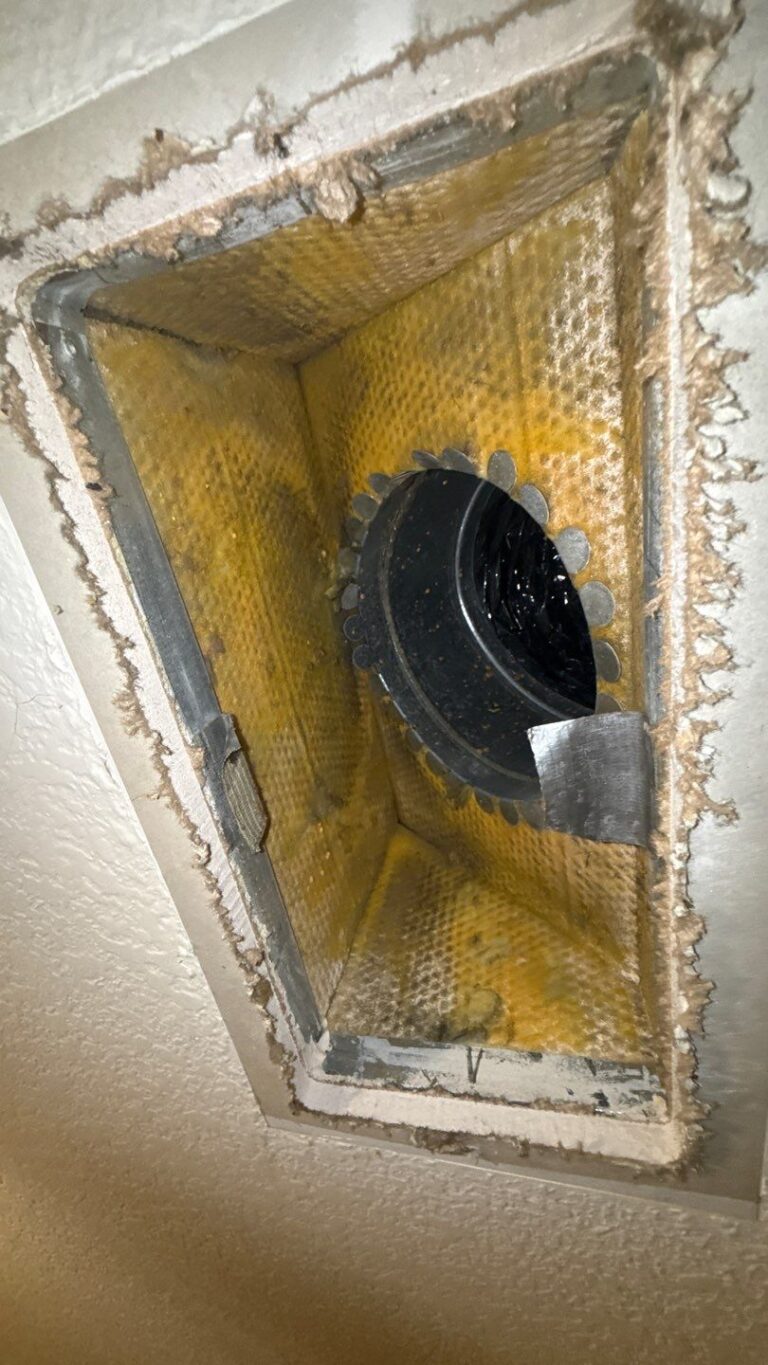
- HVAC and electrical vulnerability: As shown in our ceiling-out photos, the water bypassed insulation to reach electrical housing and HVAC ductwork, necessitating a thorough safety inspection of the home’s critical systems.
The professional reality: By stripping the attic back to the studs, we ensured that the new rebuild started on a 100% dry, safe, and mold-free foundation.
Engineering the Environment: The Drying Fortress
Drying a home in the Texas Hill Country isn’t as simple as opening a window. With our local humidity, we had to create a controlled micro-climate inside the house. We didn’t just throw a few fans in a room; we engineered a drying solution:
- LGR (low grain refrigerant) dehumidifiers: We deployed several commercial-grade units to pull gallons of water vapor out of the air every hour.
- High-velocity air movers: A fleet of fans was positioned to create laminar airflow across the studs and subfloors, whisking moisture away.
- Air scrubbers: To ensure the family was breathing clean air during the demo, we ran HEPA air scrubbers room-by-room to capture dust, debris, and potential mold spores.
The professional edge: We worked room-by-room, sealing off sections of the house to ensure our equipment could drive the relative humidity down to the bone-dry levels needed for a safe rebuild.
The Science of the Save: Drying in Place
In restoration, the easiest thing to do is tear everything out. The professional thing to do, and what we pride ourselves on at Hayden Restoration, is using science to salvage and restore. While the attic required a total stripdown due to the saturated insulation, the living quarters offered a different challenge: Could we save the high-end finishes?
Tracking the Dry Standard
We didn’t just turn on fans and hope for the best. We treated this Lakeway home like a laboratory. Our team moved room-by-room, from the laundry room and affected bathrooms to the bedrooms, living area, and office, meticulously tracking moisture content and relative humidity.
- The laundry and bathrooms: We focused on the “nasty wetness” trapped under the tiles, using targeted airflow to pull moisture out from the subfloor.
- The living area and office: These spaces featured beautiful wooden floors and wardrobe plywood that were starting to separate. By controlling the environment with LGR dehumidifiers, we were able to stabilize the wood’s equilibrium moisture content (EMC).
The Result: Salvage over Subtraction
Because we caught the gravity path in time and used a strategic drying plan, we achieved better-than-expected results:
- Flooring saved: The majority of the wooden flooring was dried in place, preventing the need for a costly and dusty tear-out.
- Baseboards and plywood: By monitoring the wicking effect in the walls, we successfully salvaged the baseboards and the wardrobe plywood, returning them to pre-loss condition without compromising their structural integrity.
- Room-by-room clearance: We didn’t pull our equipment until the readings in the office were just as bone-dry as the readings in the laundry room.
Restoration insight: Drying in place isn’t just about saving money; it’s about saving the soul of the home. We kept the original character of this Lakeway property intact by outsmarting the water before it could rot the wood.
The Final Transformation (The Rebuild)
Now that the structure was certified dry and the nasty wetness was a memory, it was time to put the house back together, better than we found it.
The Finishing Touches
- The attic upgrade: We replaced the failed tank and ensured the new installation met modern safety standards.
- The aesthetics: With the structural “bones” dry and the original floors saved, the final painting and minor tile repairs made the gravity path disappear entirely.
The Homeowner’s Peace of Mind
When we did the final walkthrough, the homeowners weren’t just looking at a beautiful home, they were looking at a documented dry home. We provided the moisture logs and thermal reports as proof that their Lakeway investment was protected against future mold or structural failure.
Don’t Let a Small Leak Become a Structural Disaster
In the Texas Hill Country, moisture doesn’t just sit, it moves. As this Lakeway case study proves, water from an attic leak follows a gravity path that can compromise your ceilings, wall cavities, and high-end flooring in less than 48 hours.
At Hayden Restoration, we don’t just dry things out. We use thermal imaging and precision moisture mapping to find the water your eyes can’t see. Our goal is always to salvage over subtract, saving your original hardwood floors and custom cabinetry through advanced dry-in-place technology.
Is your home truly dry? If you’ve experienced a leak, don’t wait for the hollow sound of ruined tile or the scent of mold. Let our Lakeway experts provide a comprehensive structural assessment.
Schedule a Professional Moisture Assessment Today from Hayden Restoration
Serving Lakeway, Bee Cave, and the Greater Austin Area.